
Comprehensive modernisation of sjp.pwn.pl
Wydawnictwo Naukowe PWN, the publisher behind one of the most frequently visited and most important linguistic platforms in Poland – sjp.pwn.pl – faced a major strategic challenge: modernising and scaling its flagship dictionary website. The goal was to create a stable, WCAG-compliant solution prepared for dynamic growth and a steadily increasing number of users.
Challenges and strategic objectives
The project presented several complex challenges that went far beyond a typical website redesign. One of the most significant was the migration of over 3 million unique URLs from the previous version of the platform — a massive and delicate operation that required precise planning to avoid any loss of SEO visibility or broken links, and to ensure a seamless user experience during the transition.
In addition, we were tasked with modernising a legacy system deeply intertwined with PWN’s extensive linguistic databases, all while maintaining performance and accessibility at scale.
The platform served both a general audience and academic users, which meant the solution had to be robust, flexible, and fully standards-compliant — including WCAG 2.2 accessibility and advanced search capabilities.
The project
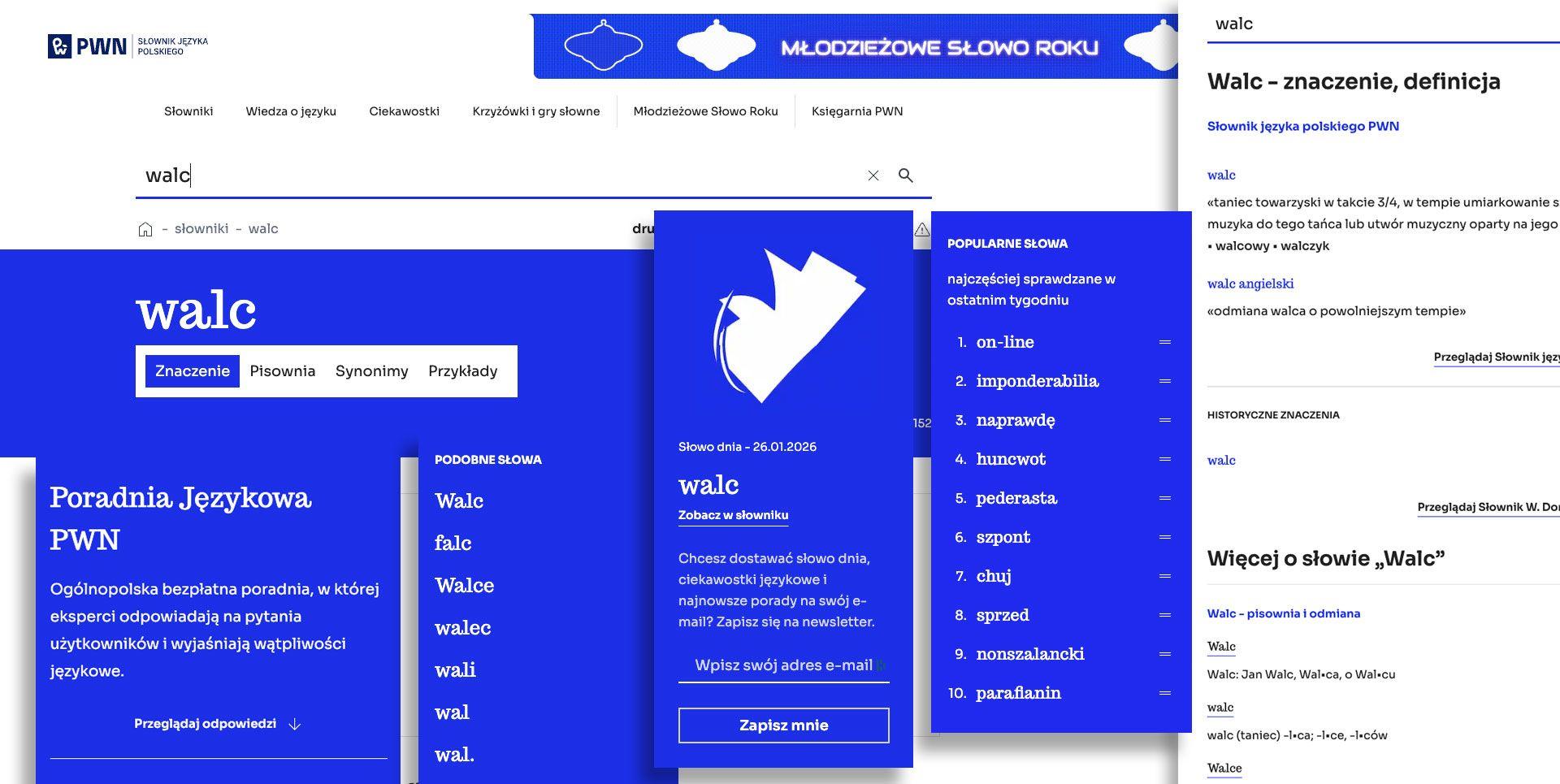
At MakoLab, we delivered a fully comprehensive project – from SEO strategy and system architecture to full implementation of the final solution. The result? The next-generation platform that meets the highest standards of usability, performance, and accessibility, while simultaneously increasing SEO visibility and reducing maintenance costs. The platform also includes the popular annual contest Młodzieżowe Słowo Roku (Youth Word of the Year), a cultural phenomenon in Poland that captures emerging trends in youth language. As part of the redesign, the contest pages were fully integrated into the new architecture, improving performance, accessibility, and editorial flexibility for each edition.
The digital transformation of sjp.pwn.pl was not merely a cosmetic refresh. It was a fundamental redesign of the site’s infrastructure, user experience, and content logic.
We began the project by identifying five strategic priorities:
-
Genuine improvement of user experience (UX): achieved through a modern interface, enhanced search capabilities, and faster load times.
-
Preserving and growing SEO visibility: the goal was not only to maintain current rankings, but also to lay a strong foundation for long-term organic growth.
-
Seamless integration with PWN’s long-standing dictionary databases: full compatibility with the existing linguistic data used daily by millions of users was critical.
-
WCAG 2.2 compliance: the platform needed to be fully accessible to all users, including those with disabilities.
-
Reduced development and maintenance costs: achieved through the adoption of a modern, open-source tech stack.
System architecture
The cornerstone of the platform’s success was its new system architecture. We adopted a microservices-based approach to ensure scalability, flexibility, and high fault tolerance.
Key components of the technology stack included:
-
Next.js with Incremental Static Regeneration (ISR): enabling lightning-fast, statically rendered pages with the ability to dynamically regenerate on demand.
-
Strapi CMS: a modern headless CMS offering flexible content modeling and easy integration with external data sources.
-
ElasticSearch: used as a fast and adaptable search engine, ideally suited to complex linguistic queries.
-
Custom-built API: enabling smooth and secure integration with PWN’s legacy dictionary databases, including support for millions of lexical records.
The result was a high-performance platform built for future growth – scalable to handle increasing traffic and adaptable for the introduction of new features and services based on a shared data core.
Strapi played a central role in the migration process, acting as the backbone of the new content architecture. API-first approach gave us full flexibility to connect with PWN’s existing databases while streamlining content delivery. What’s more, the intuitive editor interface significantly improved the publishing workflow, giving the PWN team greater control and efficiency in daily operations.
The key success factor was the flexibility and performance of Strapi CMS, which enabled smooth handling of such a vast content structure and seamless integration with PWN’s existing linguistic databases.
Results
Just two weeks after launching the new version of the website:
-
The number of indexed subpages in Google increased by 30%.
-
Average page load times decreased significantly, resulting in improved Core Web Vitals scores.
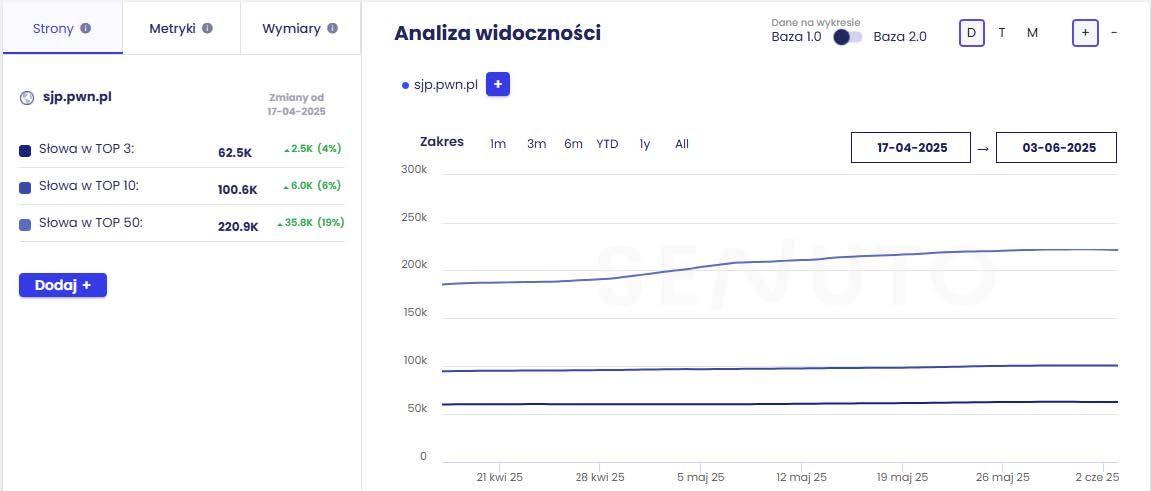
- Organic visibility improved markedly:
- +30% more indexed subpages in Google
- +4% increase in TOP 3 keywords (from 60,000 to 62,500)
- +6% increase in TOP 10 keywords (from 94,000 to 100,600)
- +19% increase in TOP 50 keywords (from 185,000 to 220,900)
An increase of nearly 36,000 keywords in the TOP 50 demonstrates the project’s success in capturing new semantic areas and optimising the site structure. Growth in the TOP 3 and TOP 10 categories was driven by better code quality, optimized internal linking, and performance improvements.
Key success
-
A newly designed content structure developed by the UX team
-
Accurate mapping and implementation of redirects from the previous site version
-
Full control over metadata and routing enabled by Next.js
-
Comprehensive SEO auditing and technical optimisation both before and after migration
Conclusion
This project for PWN is a prime example of how a strategic approach to information architecture, thoughtful technology selection, and a well-executed migration can generate tangible business outcomes. Through close partnership, agile methodology, and the expertise of our interdisciplinary team, we’ve created a platform ready for the future – efficient, scalable, and fully accessible.
If you need support in digitally transforming your platform, get in touch with us – let’s build a solution tailored to your vision.

Anna Kaczkowska
Content Marketing Specialist
Responsible for planning, creating and managing content

Jacek Popko
Head of AI services